2011/04/16

Free Adventures: Ammersfurt #7

The Secret of Ammersfurt is a free role playing supplement for the Dark Dungeon 2nd Ed game. Every week for thirty-five weeks, you'll get new bits for the Ammersfurt adventure setting, like monsters, NPC's, locations, skills, character templates, role play tips, and so on. And also every week, you'll get an adventure seed, which you can turn into a weekly adventure.


Adventure Seed 7: The Farmer's daughter


A proud and hardy farmer at the stronghold farm Coelhorst, who is an old friend of one of the heroes, asks for help. He has had a fight with his youngest daughter, now thirteen, and she left the house in tears. He thought she would see how she was wrong, and would return soon. But instead she walked into the fields late at night, and darkness fell soon. That was three days ago. Now he and the rest of the family really worry for her life.

Download the seventh part of The Secret of Ammersfurt here!

2011/04/14

Classic RPG Review #17: Pendragon


3rd edition softcover
by Greg Stafford
1990 Chaosium Inc, Oakland CAL USA

If you ever wanted to play an Arthurian knight, if you ever wanted to quest for the holy grail, if you ever wanted to joust and be chivalrous yet merry, then Pendragon may be the game for you. Pendragon isn't called Pendragon for nothing, it's because of Arthur Pendragon.

If you're not wondering what on earth Pendragon means by now, I'll tell you anyway. It means Lord of the Dragons, and it was the epithet of Arthur's father Uther. This doesn't mean the game is full of dragons however. Not at all. You can play knights, and that's pretty much it. I guess Greg Stafford just figured Pendragon would make a cool name for the game.

And I guess he's right. Greg Stafford by the way is one of my favorite game designers since “Basic Fantasy Role Playing”. Somehow he manages to provide a lot of flavour and atmosphere for his games without burying you under rules. Fortunately that's true here too.

Pendragon sports a simplified Runequest system, using a d20 instead of percentile dice. The Runequest increments of 5% each are one twentieth anyway. So why not play with a d20? It's much easier, as you don't have to multiply by 5 all the time. Also, there are less rules and mechanics than in Runequest. That's good. Less good is that the few game rules that are left, are kind of hidden between the huge amounts of flavour and background. In three columns of text per page. In over twohundred pages. You'll either need the index, or just make up the rule yourself.

New is the emphasis on role playing. And rules provided to help you. You don't quest for experience points by bashing monsters, but you quest for glory points by doing chivalrous deeds. Joust foul black knights, woe and marry the right lady, fight battles, own land. Glory makes a knightly noble tick, and sets him apart from the common folk. Also, when you design your character you have extensive rules for generating your family, family history and coat of arms. Now that's background!

Then you have personality traits and passions. Chastity, energy, honesty, cruelty, valorousness, and so on. Whenever you are challenged on a trait, the game master may require you to roll. So if you're particularly lustful, you may end up seduced all the time. If you're rather chaste you'll end up with more glory but will probably never get laid. Passions are more about your loyalties and what you'll get emotional about. Love your lord, wife or family up to the point that you'll go to hell and back for them? Or do you hate immigrant Saxons so much that you'll do much the same? Again you may be required to roll a d20 or lose control.

Lose control. That's exactly what I do, and at the same time do not like about this well meant mechanic. Using traits and passions may jog uptight hack 'n slashers and shy newbies out of their apathy. They may in fact help players to start role playing a bit. But at the same time the traits may provide yet another rule to hide behind. Oh, wow, sorry. I just missed my temper check. Now I'll have to bash you. In practice I've seen more of the latter, alas.

In Pendragon, you don't just play a knight really, but you play a dynasty. One of the goals in the game is to get married. To a non player character, it is assumed, which can be generated randomly, but it's better to find a special lady. And after getting married you try to obtain a healthy son. You can roll for this every year, randomly getting more children as you go along. And once your heir reached the adult age of 21, you can continue playing your son!

Rolling on tables does not only help you find who you can marry to, or what happens to your children, but it also generates quite a few opportunities for adventure. There even is an explicit section for solo adventures. So, if you like you could play Pendragon entirely as a solo game. Rolling up history and adventure possibilities for your character, and then playing them out with yourself as you go along. You'd almost guess that Stafford figured you'd be left without fellow players fairly often. I wonder where the guy lived while he wrote this. Alone in the outback?

How does it play? Personally I never got beyond rolling up a character and doing a few solos. So I guess I also lived in the outback when I first had the game. But I did hear of the game being played by friends. And they seemed to like the flavour and mechanics. But they also did not play for very long, perhaps finding it hard to build an actual campaign with just knights. Personally I'm still curious. It's not the first on my list as a system. But I would play if someone asked. And that's saying a lot. Meanwhile I'll page through the book for inspiration. It's very good for that too.

RULES 4/5
(rules are elegant, fairly simple, realistic, d20 based, simplified RuneQuest set of rules, with additional rules to focus on role playing, solo play and generating character history)
INSPIRATION 4/5
(Arthurian legend has always been a strong source of wonder and inspiration, and Pendragon is full of historic and literary facts, names, characters, creatures, heraldry, events, peoples and so on, for today's standards the only thing you may miss is colour print throughout)
PLAYABILITY 3/5
(starting up the game and generating your character is easy, as is building your background with tables, but actually playing adventures falls slightly short, adventures being reduced mostly to encounters, battles and jousts; also there is little room to play anyhing but a knight, as even a damsel is not a real option)
GAME FEATURES
(a true to theme Arthurian role playing game with a simple, yet effective set of rules, massive backdrop and strong suitability to solo play)
OVERALL 7/10

2011/04/11

Pick #38: "Excalibur (World)"

"Excalibur [World]: A small world located in the Sword Worlds Subsector of the Spinward Marches. Excalibur has a cool climate with a very thin oxygen-nitrogen atmosphere tainted with volcanic gas and ash."


This is the Traveller Wiki, for the Traveller role playing game. It is one of a number of role playing universe wikis, chock full of data. Chock full of imaginary data. If you want to look something up, there's over 1000 pictures and over 7000 entries. You might actually use it as a starting point or a gimmick ship's library in your Traveller style Sci Fi games. If you use this universe, naturally.

I keep being surprised by the sheer bulk of imagined worlds and datastreams out there. To think I was just looking if there was an Excalibur RPG. In fact there is, several, and the best I know is Pendragon, but that's different. I'll review that in the coming days.

Let's see what else it says:

"Excalibur is resonantly locked with its primary, Artur, orbiting at a distance of 0.30 AU and rotating three times every two orbits. Many of its native life forms have evolved into "striders" that spend their entire life cycle following the sun. Excalibur has three small moons. While two are typical, the third, Bedwyr, seems to be a captured body, which entered orbit over Excalibur approximately 4,000-5,000 years ago."

Hm. Okay. Intriguing. Well, guess all you Traveller hardcore players knew this already!

2011/04/09

Free Adventures: Ammersfurt #6

The Secret of Ammersfurt is a free role playing supplement for the Dark Dungeon 2nd Ed game. Every week for thirty-five weeks, you'll get new bits for the Ammersfurt adventure setting, like monsters, NPC's, locations, skills, character templates, role play tips, and so on. And also every week, you'll get an adventure seed, which you can turn into a weekly adventure.


Adventure Seed 6: The Threatened Nun

At the Augustine convent something is amiss. The abbess has tried to keep it secret for a while, but now the heroes have proven themselves on other cases, she dares to confide in them. There is a ghost on their premises. And they are so far unable to banish it, or set it free. The ghost particularly seeks out sister Maria Groote, who falls into madness because of the horrors the ghost shows. Now, she tells with rolling eyes, Hell will come to torture her.

Download the sixth part of The Secret of Ammersfurt here! 

Art public domain with thanks to Wikimedia.

2011/04/07

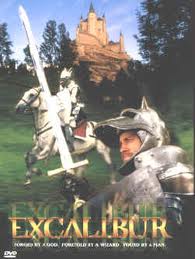
Movies for Gamers #14: Excalibur

This is part of a series of reviews of movies particularly interesting or inspiring for role playing. Because of their setting, style, characters, editing or story. Read the introduction here or here if you are new to this series.

Knights in stainless shining armour, with shoulder pieces like football heroes. Flashing blades of silver and gold. The swelling song of Carl Orff's Carmina Burana. It's King Arthur from legend. It's John Boorman's Excalibur.

No, it's not realistic. No, it's not historical. No, it's not even true to Le Morte d'Arthur by Thomas Malory – although it doesn't stray too far off. But it's magickal. It's mystical. It's dramatic, it's tragedy. You could say it's visionary. It's even somewhat gritty. And bigger than life.

My favorite is Merlin, portrayed by Nicol Williamson, who is scary and funny at the same time. Plotting behind the scenes he both witnesses and steers the land and Arthur from the old time of myth into the time of Christianity. But is it what he wants? He is caught in an inevitable drama like all the others. From the sword in the stone to the search for the Holy Grail. It makes him very intriguing.

In role playing I've not yet dared to impose the same kind of inevitability on the players. Usually it doesn't feel right – and players hate to be railroaded. Usually it doesn't feel right in a movie either, but here it does. Maybe it is because the characters have such a clear sense of purpose and destiny, and they do not care that they direct themselves to their own doom. Maybe that's why it works. All characters have to do what they have to do.

Now that might work in role playing, but the players would need to know. All would need to know beforehand that they will play in a tragedy. All should know that they will push their characters into their own damnation. All would have to know and agree it will not end well. Then it might work. Food for thought. Food for a coming experiment.

On the other hand, if Arthur would just have been cool about Lancelot and Guinevere, there would have been much less of a problem.

Excalibur was finished in 1981, but it feels timeless. Worth viewing and viewing again, different from virtually every other movie in feel. And yet, there is a remake in the works. By Wunderkind Brian Singer, who also did “The Usual Suspects”, “The X-Men” and “Valkyrie”. It's produced by John Boorman himself – who did the 1981 Excalibur – and it's scheduled for release in 2012. Then we'll have the Once and Future King once again.

2011/04/04

Pick #37: Maelstrom RPG Resurrected

A few days ago I had a look at the Maelstrom RPG, written by Alexander Scott ages ago, in the 1980-ies. He wrote it as a teenager, did unexpectedly well, and the game had absolutely no follow up. For twenty-four years.

But now, from the future of the Maelstrom, comes the Maelstrom Companion. It's not written by Scott, but it is okayed by Puffin. And I understand it's not bad at all. So maybe, after all this time, twenty-four years, the game Maelstrom will finally get its deserved public.

Or at least some. The Maelstrom Companion, and a few other supplements for the game are written by Graham Bottley of Arion Games. And the promise is there will be more. Including some free downloads to wet the appetite. Nice detail is that the companion indeed tries to fill the gap of the lacking historic background, and it provides some ideas for your campaign.


Want to know more? RPGPundit from Urugay reviewed the Companion in 2009 as it appeared.

2011/04/02

Free Adventures: Ammersfurt #5

The Secret of Ammersfurt is a free role playing supplement for the Dark Dungeon 2nd Ed game. Every week for thirty-five weeks, you'll get new bits for the Ammersfurt adventure setting, like monsters, NPC's, locations, skills, character templates, role play tips, and so on. And also every week, you'll get an adventure seed, which you can turn into a weekly adventure.
 
Adventure Seed 5: The Body in the Canal

In the early hours of the day a scream echoes through the streets. In one of the canals of Ammersfurt a body is found drifting. It is the dead body of fifty year old Cornelius Coperszoon, a high magistrate, merchant and “Schepen” {an alderman}. Examination of the body shows that his head was hurt by a hard blow, and after that he may have drowned in the water. Was he murdered? And if so, by whom, and why? The Burghermaster again asks the help of our heroes.

Download the fifth part of The Secret of Ammersfurt here!